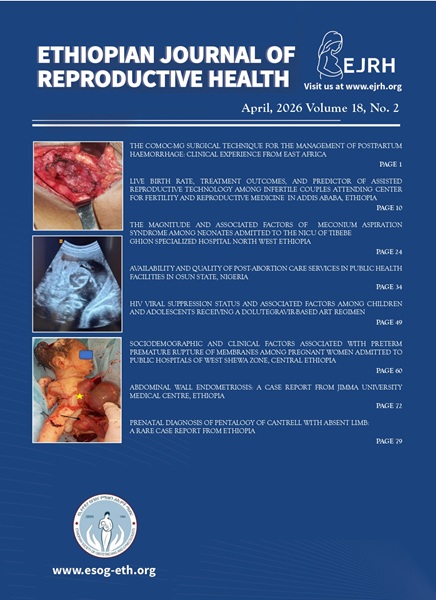
From Evidence to Action: Improving Maternal and Newborn Health
DOI:
https://doi.org/10.69614/ejrh.v18i02.1134Abstract
This issue highlights key challenges and practical solutions to improve maternal, reproductive, and newborn health in sub-Saharan Africa. A common message emerges: many deaths and complications can be prevented with timely care, simple innovations, and stronger health systems.
Postpartum hemorrhage (PPH) remains a leading cause of maternal death. One study presents a simple surgical technique (COMOC-MG) that helped control bleeding and preserve the uterus in most high-risk cesarean cases. Although based on a small sample, it shows promise as a low-cost, life-saving option in resource-limited settings.
A study from Ethiopia found that pre-eclampsia, poor maternal nutrition, and a history of PPROM increase the risk of early membrane rupture. This highlights the need for better antenatal care, including early detection of high-risk conditions and improved nutrition.
Infertility care is also advancing. Data from Ethiopia’s fertility center show a moderate success rate for assisted reproductive technology, with better outcomes linked to factors like younger age and good-quality embryos. These findings can help improve fertility services in similar settings.
A study from Nigeria shows that post-abortion care is still limited, especially in rural and primary care facilities. Improving access to trained staff and essential supplies is critical to reduce preventable deaths. There is encouraging progress in pediatric HIV care. High viral suppression rates were achieved with newer treatments, especially among children with good adherence and nutritional support. This shows
that strong follow-up and family support are essential. Newborn health is still at risk. Meconium aspiration syndrome remains a significant problem, especially in post-term pregnancies and poorly monitored labor. Better fetal monitoring and timely delivery can reduce these risks.
The case reports remind clinicians to stay alert to rare conditions and the importance of early diagnosis and counseling in complex cases.
Overall, these studies show that practical, affordable interventions, combined with better health systems, can make a real difference. Strengthening care across all levels is key to saving lives and improving outcomes.
Wondimu Gudu (Editor- in-Chief)
Ethiopian Journal of Reproductive Health (EJRH)